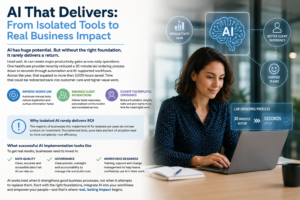
Are you in a business that has embraced digital transformation? Those that do want to get ahead of their competitors and offer customers another channel to interact. AI is one of the biggest players and it has the potential to change the way companies operate. But here’s the thing: just adopting new tech like AI isn’t enough. There’s something just as important that often gets overlooked, change management.
You might be wondering, what exactly is change management? Well, it’s all about guiding people through the changes that come with new technology. It’s not just about the software or hardware. It’s about how everyone in the company adapts to these new tools and ways of working. If businesses want to see the full benefit of AI or any new technology, they need to focus on how they help their teams adjust.
Here’s why change management is so crucial in digital transformation:
First off, people need time to adjust. AI and new technologies can be a lot to take in, especially if employees are used to doing things a certain way. There’s often a bit of fear or anxiety when something new is introduced. That’s perfectly normal. Change management helps by making sure people get the support they need to learn and feel comfortable with the new tools.
Along with that, change management helps businesses avoid resistance. It’s common for people to resist change, especially when it’s unfamiliar or seems complicated. When leaders communicate the reason behind the changes, such as, why AI will make the company more efficient, or how it will help employees with their work, it makes the whole process less daunting. When employees understand why something is changing, they’re more likely to be open to it.
Another reason why change management is key is that it helps make transitions smoother. AI, for example, has so much potential to improve processes, but it won’t be effective if employees aren’t properly trained. Change management steps in here by ensuring that there are training programs in place, giving people the knowledge and confidence they need to make the most of the new tools.
And then, there’s the benefit of better collaboration. AI can help teams work smarter, but only if everyone is on board and feels confident in using it. When employees understand and embrace the changes, they’re more likely to collaborate which can improve overall team dynamics.
Finally, digital transformation is a long-term journey. It doesn’t end the moment AI is introduced. In fact, it’s just the beginning. Change management helps companies build a culture of continuous learning and adaptation, so employees can keep up with the evolving technology and drive long-term success.
So, how does change management work in practice? Well, it starts with clear communication. Employees need to know what’s coming and why it matters to them. Being upfront about the changes, what to expect, and how they’ll benefit everyone in the long run sets the tone for a smoother transition.
Then, of course, training is essential. Employees need to feel capable of using the new tools, so providing training sessions, resources, and ongoing support is crucial. And remember, change can be tough. That’s why creating an environment where employees feel supported through coaching and being able to ask questions can make all the difference.
Involve your employees in the process. Get their feedback, address their concerns, and make sure they feel like they’re part of the transformation. When people are included and heard, they’re more likely to embrace the change.
In Summary
AI and other digital technologies create opportunities but adopting them without proper support can cause confusion and pushback. Change management is what ensures employees are on the same page. They understand the tools they’re using, and that they’re ready to make the most of these changes. With the right approach, businesses can smoothly navigate digital transformation and make sure their teams succeed every step of the way.
#DigitalTransformation #ChangeManagement #AIAdoption#TechInnovation #EmployeeEngagement #DigitalTools #BusinessSuccess #TechAdoption #OrganisationalChange #FutureOfWork #TransformationStrategy #BusinessGrowth #TechSupport #LeadershipInTech
How has Change Management impacted your team’s experience during a transition?